Ninety minutes with a machine that gets it wrong.
An AI incursion for Perth schools, from Pre-primary to Year 12. Your class watches a machine get something confidently wrong, and spends the rest of the session working out why. Nobody needs a device.
One presenter, with your own teacher in the room throughout.
The 90-minute incursion
$650 for 90 minutes
All prices are in AUD. We aren’t registered for GST, so no GST is added.
It’s presenter-led and projected, so students don’t need devices. We need a projector and some clear floor.
- One class or year group, up to 60 students
- Your own teacher stays in the room
- No student devices and no student data
The ninety minutes, Pre-primary to Year 6:
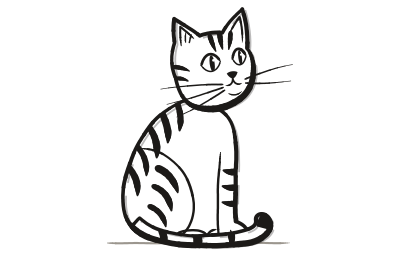
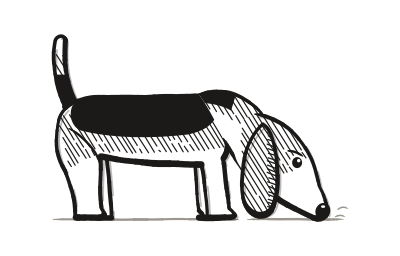
- Minutes 0–8 The cold open No introductions and no slides. We teach the machine one picture of a cat, and it calls the next card a cat, 100% sure.
- Minutes 8–30 We teach it The class supplies the examples and watches it learn. Students call the next example and keep the score.
- Minutes 30–40 We break it We show it the one thing nobody taught it. It gets it wrong, and it’s sure of itself. The class works out why before we say a word.
- Minutes 40–55 On your feet An activity with no screens. Every student has a job, and the jobs swap halfway.
- Minutes 55–75 So what The big question for their age, run as a whole-room argument. Students pick a side, then vote again to see who moved.
- Minutes 75–86 The line Your teacher can lead this part. Each pair agrees one rule for the room in a single sentence.
- Minutes 86–90 One sentence A student says the takeaway, and the room says it back.
From Year 7: the same shape, with the presenter typing and the room deciding
- Years 7 to 9
- Break the Bot. The class writes a help-bot’s rules and a student plays the bot. Everyone else tries to talk it past them. Then, what counts as evidence when a face can be faked.
- Years 10 to 12
- An AI tool used live on the presenter’s laptop, on a task the room votes for. Then a talk about assessment, including why detectors don’t reliably work.
Teach it cats and dogs. Then show it a rabbit.
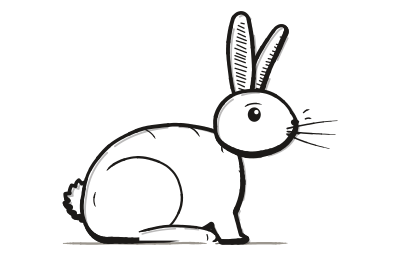
This is the screen at minute 30, in your browser. Pick a card and teach it cat or dog. Then hold up the rabbit and mark what it says.
I think this is a
Cat
95% sure
It was sure, and still wrong.
That’s a rabbit. Nobody taught it rabbits, so rabbit was never one of its answers.
Cat 4 examples Dog 4 examples
Pick a card to hold up, then teach it what the card is.
How it decides
This is TEACH IT’s own rule, on the Series 1 picture cards. It finds the three examples of each animal most like the card on camera, and shares 100% between the animals it knows. It can only ever answer with something it was taught. How alike two cards look comes from TEACH IT’s picture model, measured on 2 October 2026. In our test run on the projector, taught four cats and four dogs, it called the rabbit a cat, 95% sure. Nothing you do here is recorded or sent anywhere.
A series for every year level, and one for staff
The storyline stays the same at every age. What changes is the activity and the question the room argues about. Each series has a free pack with a complete activity you can run without us.
- Pre-primary to Year 2
- The Computer Puppy
- Years 3 to 6
- Who Taught the Machine?
- Years 7 to 9
- Can You Trust It?
- Years 10 to 12
- Your Move
- Staff PD
- Monday Morning AI
Mapped to the WA curriculum
WA schools teach SCSA’s Western Australian Curriculum, which has its own codes. Each pack lists the WA content descriptions its series supports, quoted from SCSA, next to the Australian Curriculum v9 that WA’s is adapted from.
“Evaluate the authenticity, accuracy and timeliness of acquired data”
The rules we follow
Teachers are right to be careful with this. These rules hold at every year level.
Staff PD: Monday Morning AI
The staff session comes in two halves. First your teachers bring real tasks and we build one live at the front. The tool gets the draft most of the way, and a teacher finishes it.
Then the harder conversation about assessment, including why AI detectors don’t reliably work, and where your school stands.
Built live at the front, in the first half
- A rubric built from a task description
- Report comments, differentiated by achievement level
- One passage rewritten at three reading levels
- A quiz with its answer key
Then, the second half. Assessment, detectors and where your school stands.